
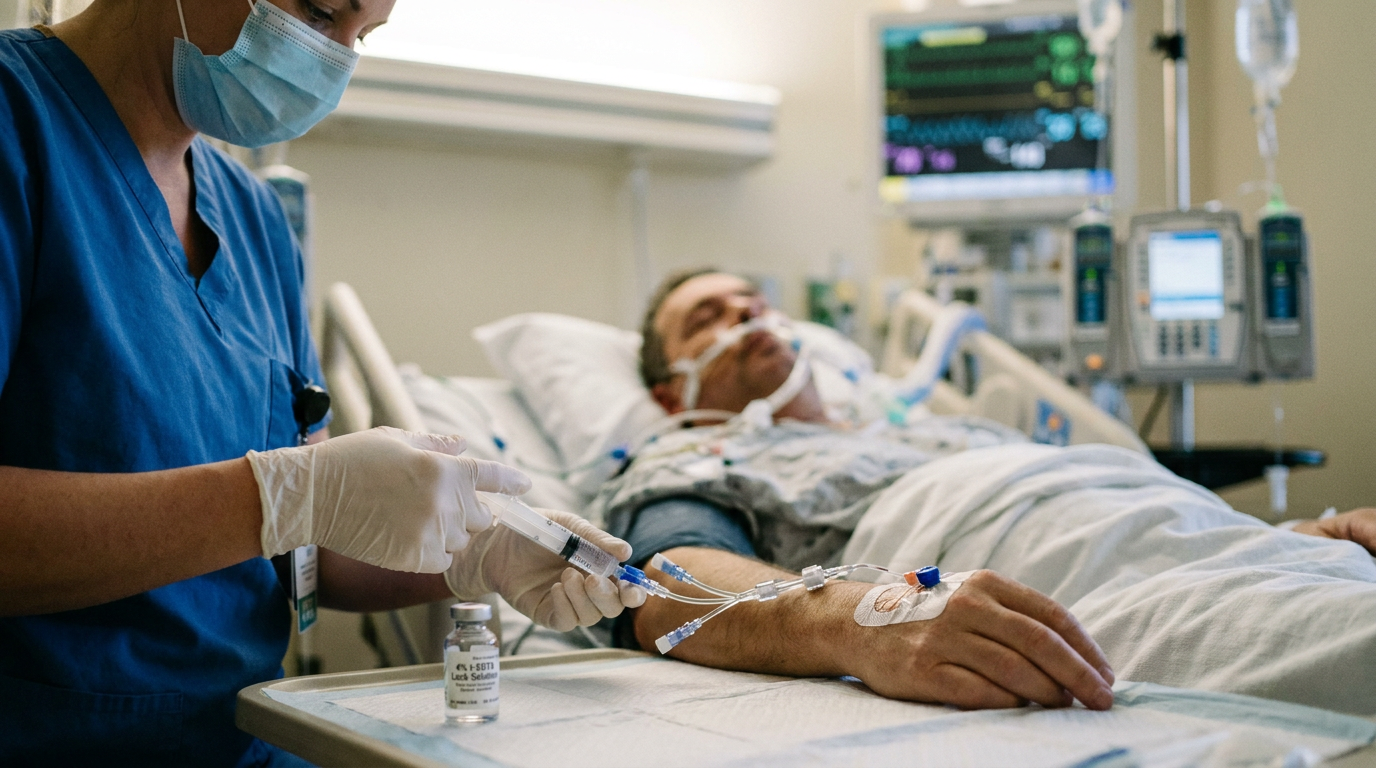
- This study investigated how frailty influences the association between intensive care unit readmission and 60-day mortality.
- Researchers analyzed 615,719 intensive care unit admission episodes from 203 units in Australia and New Zealand.
- Observed 60-day mortality was highest in frail, readmitted patients at 22.7%, compared to 2.7% overall.
- The authors concluded that intensive care unit readmission increased 60-day mortality, regardless of frailty status.
- These findings underscore the importance of frailty assessment in identifying patients at highest risk for adverse outcomes.
Frailty, Intensive Care, and Patient Outcomes
Frailty, a state of reduced physiological reserve, is a well-established predictor of adverse outcomes in hospitalized patients, including increased morbidity and mortality [1, 2, 3, 4, 5]. A separate but related challenge is intensive care unit (ICU) readmission, which often signals a deteriorating clinical course and carries its own significant mortality risk [6]. While clinicians recognize the independent dangers of both frailty and ICU readmission, the prognostic implications of their interaction have been less clear [7, 8]. A large registry-based study from Australia and New Zealand now provides a detailed analysis of how frailty status affects outcomes for patients requiring a return to the ICU during the same hospitalization.
Understanding the Interplay of Frailty and Readmission
The primary objective of the research was to determine if the established association between ICU readmission and mortality is modified by a patient's underlying frailty. Given that both conditions are common and independently linked to poor outcomes, understanding their combined effect is critical for risk stratification and patient counseling. The investigators aimed to move beyond simply acknowledging that frail, readmitted patients fare poorly, and instead quantify the specific, additional risk conferred by a readmission in both frail and non-frail individuals. This addresses a crucial gap in the literature regarding how to prognosticate for this particularly vulnerable patient subgroup.
Study Design and Patient Cohort
The researchers conducted a retrospective analysis using the Australian and New Zealand Intensive Care Society Adult Patient Database. This large-scale design provided a robust dataset encompassing all adult patients (age ≥ 18) admitted to 203 ICUs between January 2017 and December 2022. A key inclusion criterion was a documented Clinical Frailty Scale score, with frailty defined as a score of 5 or greater. The final analysis included 615,719 distinct ICU admission episodes. Within this cohort, 19% (115,453 patients) were classified as frail. The data also showed that 4.1% of patients (25,329) were readmitted to the ICU during their hospital stay, providing a substantial sample to study the intersection of these two risk factors.
Methodology for Outcome Assessment
The study's primary endpoint was 60-day mortality. To analyze this, the authors employed a Cox proportional hazards model, a statistical method suited for time-to-event data. The model was specifically designed to treat the time to ICU readmission as a time-dependent covariate, an approach that accurately reflects that readmission is an event that can occur at any point during hospitalization, not a static baseline characteristic. An interaction term between frailty and readmission was included to formally test if the mortality risk of readmission differed between frail and non-frail patients. The authors used regression standardization to translate statistical hazard ratios into absolute risk differences, a metric that is often more clinically intuitive. To account for the possibility that a patient might die before having the chance to be readmitted, the team also conducted a competing risk analysis. This technique provides a more accurate estimate of mortality risk by treating in-hospital death without ICU readmission as a competing outcome. Secondary outcomes, including length of hospital stay and discharge location, were also assessed to provide a broader view of morbidity.
Frailty's Impact on Readmission and Baseline Mortality
The analysis first confirmed that frailty is a powerful independent risk factor. Patients with frailty were found to have a higher likelihood of returning to the ICU; the subdistribution hazard ratio (SHR) for ICU readmission was 1.10 (95% CI, 1.07–1.14). More dramatically, frailty significantly increased the baseline risk of death even without a readmission event. The SHR for death without readmission among frail patients was 2.83 (95% CI, 2.72–2.94) compared to non-frail patients. These findings underscore that a patient's frailty status at admission is a critical determinant of their overall hospital trajectory, elevating the risk of both major complications and mortality from the outset. Across the entire cohort, 2.7% of patients (16,353) died in the hospital by day 60.
Readmission's Incremental Risk Across Frailty Statuses
When examining the combined effect of frailty and readmission, the study revealed a stark clinical reality. The highest mortality rate was observed in patients who were both frail and readmitted to the ICU, with observed 60-day mortality in this group reaching 22.7%. This confirms that this specific patient population faces the poorest prognosis. However, the central finding of the study emerged when the researchers calculated the additional risk imposed by a readmission. They found that the standardized risk increase in 60-day mortality associated with an ICU readmission was nearly identical for patients with and without frailty. For frail patients, readmission added 14.6% (95% CI, 13.7–15.6%) to their absolute risk of death. For non-frail patients, the added risk was 14.9% (95% CI, 13.4–16.6%). This indicates that while frail patients have a much higher baseline mortality risk, the event of an ICU readmission represents a similarly catastrophic event in terms of added mortality, regardless of a patient's pre-existing frailty status.
References
1. Rottler M, Ocskay K, Sipos Z, et al. Clinical Frailty Scale (CFS) indicated frailty is associated with increased in-hospital and 30-day mortality in COVID-19 patients: a systematic review and meta-analysis. Annals of Intensive Care. 2022. doi:10.1186/s13613-021-00977-4
2. Lin H, Watts JN, Peel NM, Hubbard RE. Frailty and post-operative outcomes in older surgical patients: a systematic review. BMC Geriatrics. 2016. doi:10.1186/s12877-016-0329-8
3. Thangavelu V, Bhatia O, Hasija A, et al. Association of Preoperative Frailty and Postoperative Outcomes in Older Adults Undergoing Major Cardiac Procedures: A Systematic Review and Meta-Analysis.. Anesthesia and Analgesia. 2025. doi:10.1213/ANE.0000000000007887
4. Falk H, Guðnadóttir GS, Alfredsson J, et al. The Association Between the Clinical Frailty Scale and Adverse Health Outcomes in Older Adults in Acute Clinical Settings – A Systematic Review of the Literature. Clinical Interventions in Aging. 2023. doi:10.2147/cia.s388160
5. Lee JA, Yanagawa B, An KR, et al. Frailty and pre-frailty in cardiac surgery: a systematic review and meta-analysis of 66,448 patients. Journal of Cardiothoracic Surgery. 2021. doi:10.1186/s13019-021-01541-8
6. Morkisch N, Upegui-Arango LD, Cardona MI, et al. Components of the transitional care model (TCM) to reduce readmission in geriatric patients: a systematic review. BMC Geriatrics. 2020. doi:10.1186/s12877-020-01747-w
7. Moskven E, Charest-Morin R, Flexman A, Street JT. The Measurements of Frailty and Their Possible Application to Spinal Conditions. A Systematic Review.. The spine journal. 2021. doi:10.21203/rs.3.rs-754201/v1
8. Fields AC, Castillo-Angeles M, Bryan MR, et al. Rib Fracture Injury Guidelines for Patients Over the Age of 65: Should These Patients Routinely Be Admitted to the Intensive Care Unit?. Journal of Surgical Research. 2025. doi:10.1016/j.jss.2025.09.051