
The Briefing
Continuous newsroom coverage of clinically relevant evidence — newest first.
Earlier
24 stories-

MIPD Improves Early Postoperative Activity, Reduces Stress for Pancreatic Resection
A randomized trial shows minimally invasive pancreatoduodenectomy leads to higher physical activity and heart rate variability for weeks.
-

IL-6 Inhibition Shows Clinical Signals in Refractory Depression
A small trial of tocilizumab for difficult-to-treat depression suggests potential for symptom improvement and identifies patient selection markers.
-
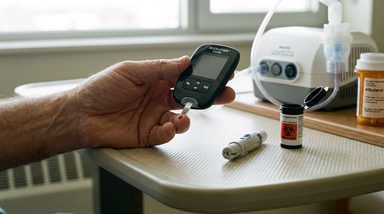
Diabetes Worsens Bronchiectasis Outcomes, Increases Comorbidities and Infection Risk
A large registry analysis confirms diabetes significantly impacts disease severity, exacerbations, hospitalizations, and mortality in bronchiectasis.
-

Buried DIEP Flaps Show Similar Complication Rates to Skin Paddle Flaps
A retrospective review suggests completely burying deep inferior epigastric perforator flaps does not increase overall complication rates.
-

Anhedonia Severity Predicts Intermittent Theta-Burst Stimulation Response in MDD
Baseline anhedonia levels influence neurophysiological and clinical outcomes following iTBS for major depressive disorder.
-

Nasal Septal Perforation Impairs Olfactory and Trigeminal Function
A cross-sectional study links larger perforation areas and higher BMI to worse olfactory identification in patients with NSP.
-
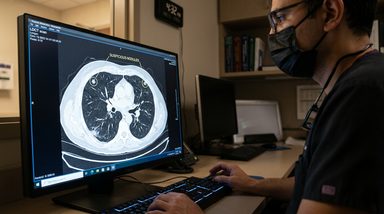
Subsolid Lung Nodules Show High 5-Year Survival, Low Nodule-Related Mortality
A large cohort study clarifies the natural history and long-term outcomes of subsolid and ground-glass lung nodules.
-

Weight Loss Intervention Safe in Older AF Patients, But Does Not Improve Symptoms
A randomized clinical trial indicates that while weight loss is achievable and safe in older, overweight AF patients, it may not reduce AF symptoms.
-

Individual LPFC Maps Reveal Fine-Grained, Interdigitated Networks
Precision fMRI in 10 individuals shows the lateral prefrontal cortex has a more fragmented and functionally distinct organization than group.
-

MIF Modulates Astrocyte Distribution in Schizophrenia Cortical Spheroids
A new study using patient-derived brain models identifies macrophage migration inhibitory factor (MIF) as a key regulator of astrocyte function.
-

Azithromycin Does Not Reduce Acute Wheezing Severity in Preschoolers
A multicenter trial found azithromycin offered no significant clinical benefit over placebo for moderate-to-severe wheezing symptoms.
-

Melittin Mitigates Doxorubicin-Induced Neurotoxicity in Murine Models
A study in mice suggests melittin, a bee venom component, reduces doxorubicin's neurotoxic effects by targeting inflammation and oxidative stress.
-
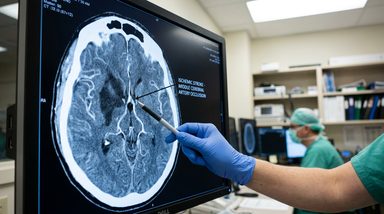
TSPO Deletion Reduces Cortical Spreading Depolarization in Mice
A new study in mice suggests that modulating translocator protein 18 kDa may influence CSD generation and associated neurovascular and inflammatory re
-

Low-Dose IL-2 Fails to Expand Tregs After Alemtuzumab in RRMS
A mechanistic study reveals that low-dose interleukin-2 alone does not boost regulatory T cells in alemtuzumab-treated multiple sclerosis patients.
-

Vertebrobasilar and Middle Cerebral Aneurysms Carry Highest Case Fatality Rates
A population-based study of 13,470 cases shows that aneurysm location significantly influences sudden death and 30-day mortality risks.
-

MSK1 Mediates BDNF Signaling in Striatal Development, Affecting Psychiatric-Relevant Behaviors
A new study identifies mitogen- and stress-activated kinase 1 (MSK1) as a key mediator in brain-derived neurotrophic factor (BDNF) pathways critical.
-

Inhaled Treprostinil Slows Lung Function Decline, Reduces Clinical Worsening in IPF
A phase 3 trial demonstrates that inhaled treprostinil significantly mitigates FVC reduction and clinical deterioration in patients with idiopathic.
-

Validating Generative AI Therapeutics: A Proposed Framework for Clinical Integration
A new framework outlines a multi-stage validation process to ensure the safety and efficacy of generative AI agents in mental health care.
-

Cerebellar iTBS Improves Post-Stroke Cognition via Dentate Nucleus-Ventromedial Thalamus Pathway
A mouse model study identifies the specific neural circuit mediating the cognitive benefits of intermittent theta-burst stimulation after stroke.
-

Fine Particulate Matter Increases Risk of Recurrent Stroke and Death
A national cohort study finds that PM2.5 exposure nearly triples the risk of stroke recurrence and secondary cardiovascular events.
-
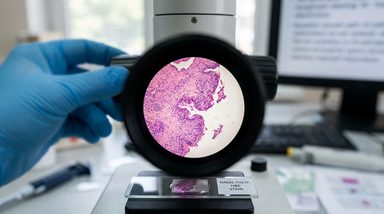
Cathepsin S Links to Tissue Remodeling, Severity in Chronic Rhinosinusitis with Nasal Polyps
Integrative multi-omics analysis identifies cathepsin S (CTSS) as a key mediator of tissue remodeling and disease severity in CRSwNP.
-

4% Tetrasodium EDTA Lock Reduces CVAD Complications in ICU Adults
A multicenter, cluster-randomized trial shows 4% t-EDTA locking fluid decreases a composite of CVAD-associated events, primarily catheter occlusions.
-

VSED with Hospice: Clinical Course, Symptom Management, and Patient Demographics
A case series details the clinical trajectory, symptom burden, and care needs of patients choosing voluntarily stopping eating and drinking.
-

Tezepelumab Reduces Oral Corticosteroid Use in Severe Asthma
A phase 3 trial demonstrates that tezepelumab significantly lowers daily oral corticosteroid dose in adults with severe, OCS-dependent asthma.