
The Briefing · Psychiatry & Cognitive Neurology
Continuous newsroom coverage of evidence in Psychiatry & Cognitive Neurology — newest first.
Earlier
24 stories-

GLP-1 Receptor Agonists Reduce Psoriasis Severity in Patients With Obesity
A National Psoriasis Foundation primer details how incretin therapies lower skin scores and systemic inflammatory markers.
-

Comparative Transcriptomics Map Shared Molecular Pathways in Parkinsonian Disorders
A large-scale analysis of 977 brain samples identifies core failures in protein homeostasis and mitochondrial metabolism across syndromes.
-

Intravenous Tocilizumab Stabilizes Severe Pediatric Neuroinflammation Within 72 Hours
A retrospective study shows rapid clinical improvement and intracranial pressure reduction in children with refractory CNS inflammation.
-

2C-B Shows Empathogenic and Psychedelic Effects with Low Cardiovascular Strain
A crossover trial compares 30 mg of 2C-B to MDMA and psilocybin, finding similar emotional empathy and a shorter five-hour duration.
-

Semaglutide Improves Reward-Based Motivation in Patients With Major Depressive Disorder
A randomized trial shows oral semaglutide reduces the perceived cost of physical effort in patients with depression and elevated BMI.
-

Interdisciplinary Whole Health Teams Improve Chronic Pain Function Over Standard Care
A randomized trial of 764 veterans shows that value-aligned team care reduces pain interference more than group therapy or usual care.
-

MRI Index Quantifies Alzheimer’s Pattern to Predict Dementia Onset
A structural brain vulnerability index identifies early neurodegeneration and predicts conversion from mild cognitive impairment.
-

Prenatal Depression Does Not Alter Infant Oral Microbiome at Birth
A cohort study of 324 mother-infant pairs finds no link between maternal affective symptoms and neonatal microbial diversity or composition.
-

Lithuanian Liebowitz Social Anxiety Scale Shows High Reliability in Young Adults
A validation study of the self-report version finds strong internal consistency but suggests total scores are most robust for assessment.
-

Plasma Tau and MRI Mismatch Identifies Rapid Alzheimer's Decline
Disproportionate brain atrophy relative to plasma ptau217 levels signals a vulnerable phenotype with faster cognitive loss and co-pathology.
-

All of Us Program Links 14 Years of Wearable Data to Clinical Records
A massive dataset connects Fitbit metrics from 59,000 participants to genomics and electronic health records for longitudinal research.
-

Chronic and Social Needs Linked to High School Absenteeism
A national study finds children with both chronic health conditions and social instability face a 9.4% risk of missing 11 or more school days.
-

Gut Microbiome Linked to Macrocephaly in NF1 Mouse Model
Sex-specific microbial signatures correlate with brain size and autism-like behaviors in mice with Neurofibromatosis type 1 mutations.
-

Low CSF Amyloid-Beta Predicts Intracranial Hemorrhage in CAA Patients
Low levels of amyloid-beta 40 and 42 in cerebrospinal fluid are associated with a sevenfold increase in future symptomatic bleeding risk.
-

Genetic Risk Factors Directly Link to Pediatric Suicidality Independent of Symptoms
Polygenic scores for internalizing and externalizing traits reveal direct and mediated pathways to suicidal ideation and attempts in youth.
-

Astrocytic Hemichannel Overactivity Drives Prefrontal Circuit Deficits in Schizophrenia Models
Elevated connexin 43 in the prefrontal cortex triggers excessive glutamate release, offering a potential non-neuronal therapeutic target.
-

Responsive Neurostimulation Reduces Focal Seizures by 82% at Three Years
A prospective postapproval study of 324 adults shows real-world seizure reduction exceeds initial clinical trial results.
-

GDF-15 Predicts Depressive Symptoms in Adults Aged 72 and Older
A longitudinal study finds that growth differentiation factor 15 correlates with depression severity only in geriatric populations.
-
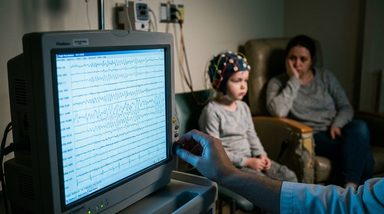
Caregiver Strain Mediates Alpha Wave Activity in Children With ADHD
Subjective internalized caregiver stress links clinical attention deficits to posterior alpha power, suggesting environmental modulation.
-

Basal Ganglia Perivascular Spaces Predict Long-Term Executive and Visuospatial Decline
A decade-long study identifies perivascular spaces as an independent marker of cognitive deterioration, distinct from other vascular lesions.
-

First-Time Seizure Linked to Increased Risk of Systemic and Neurological Cancer
A Danish cohort study finds a fivefold increase in overall cancer risk within one year of an initial seizure in adults.
-

Subliminal Threat Cues Trigger Sustained Social Avoidance in Women
Eye-tracking data reveals that unconscious perception of anger or disgust leads to reduced visual engagement with subsequent happy faces.
-
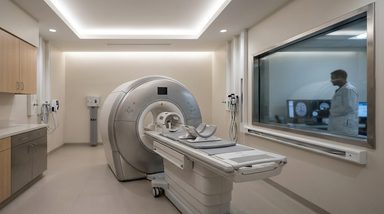
Automated MRI Segmentation Establishes Brain Volume Norms for Very Preterm Infants
Sex-stratified reference ranges for 26 brain regions provide a clinical baseline to identify developmental deviations at term-equivalent age.
-

Subthalamic Nucleus Predominantly Facilitates Action in Primate Models
Electrophysiological data show 89 percent of task-related neurons in the subthalamic nucleus promote rather than inhibit motor choices.