
The Briefing · Emergency & Critical Care
Continuous newsroom coverage of evidence in Emergency & Critical Care — newest first.
Earlier
24 stories-

GLP-1 Receptor Agonists Reduce Psoriasis Severity in Patients With Obesity
A National Psoriasis Foundation primer details how incretin therapies lower skin scores and systemic inflammatory markers.
-
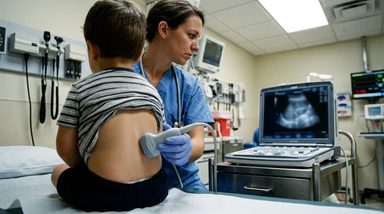
Lung Ultrasound Reaches 94% Sensitivity for Pediatric Pneumonia Diagnosis
Meta-analyses indicate point-of-care ultrasound offers up to 96% specificity while eliminating radiation exposure in children.
-

Endothelial Nitric Oxide and Nitrosative Stress Drive Potassium Channel Migraine Pain in Mice
Mouse study finds that KATP channel-induced hypersensitivity requires eNOS and peroxynitrite rather than traditional cGMP signaling.
-

Automated Model Predicts Surgical Complications Across 14 Health Systems
A multicenter analysis of 508,097 encounters shows high accuracy in predicting ICU admission, kidney injury, and in-hospital mortality.
-

Intravenous Tocilizumab Stabilizes Severe Pediatric Neuroinflammation Within 72 Hours
A retrospective study shows rapid clinical improvement and intracranial pressure reduction in children with refractory CNS inflammation.
-

Systemic Steroids Accelerate Symptom Resolution in Orbital Cellulitis
An American Academy of Ophthalmology review finds steroids safe but notes inconsistent effects on hospital stay and surgical rates.
-

Patient-Provided Video Footage Influences Pediatric Trauma Management Decisions
Reviewing video of injury mechanisms altered imaging and specialist consultation plans in over half of pediatric emergency cases.
-

Systematic Protocols Identify and Treat True Resistant Hypertension
True resistant hypertension affects 10% of treated patients and carries a 10.3% absolute risk increase in cardiovascular death.
-

2C-B Shows Empathogenic and Psychedelic Effects with Low Cardiovascular Strain
A crossover trial compares 30 mg of 2C-B to MDMA and psilocybin, finding similar emotional empathy and a shorter five-hour duration.
-

Outpatient Oncology Records Lack Goals-of-Care Documentation for Most Older Adults
A retrospective study of 7,743 patients found that only 43% had documented goals-of-care conversations in their electronic health records.
-

Intravenous NAD+ Reduces Post-Resuscitation Lung Injury in Swine Model
Exogenous NAD+ administration improves oxygenation and limits pulmonary edema by inhibiting ferroptosis-mediated cell death.
-

Spectral CT Reconstructions Improve Acute Bowel Ischemia Detection
Adding iodine maps and monoenergetic images to portal venous CT increases diagnostic accuracy from 73% to 86% across scanner platforms.
-

Chronic and Social Needs Linked to High School Absenteeism
A national study finds children with both chronic health conditions and social instability face a 9.4% risk of missing 11 or more school days.
-

Mild Acute Kidney Injury Minimally Affects Long-Term Kidney Function Decline
A study of 1,603 patients finds that mild to moderate AKI causes a small permanent drop in GFR without accelerating annual decline.
-

Helicopter Transport Increases Survival for Specific High-Risk Trauma Phenotypes
Patients with low Glasgow Coma Scale scores and respiratory distress show the greatest benefit from air medical evacuation.
-

Low CSF Amyloid-Beta Predicts Intracranial Hemorrhage in CAA Patients
Low levels of amyloid-beta 40 and 42 in cerebrospinal fluid are associated with a sevenfold increase in future symptomatic bleeding risk.
-
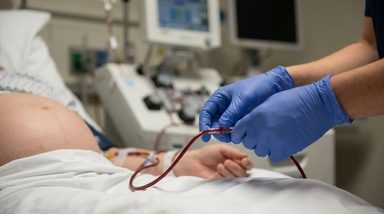
Targeted sFlt-1 Apheresis Safely Extends Pregnancy in Very Preterm Preeclampsia
A pilot trial shows selective removal of sFlt-1 reduces maternal blood pressure and delays delivery by a median of 10 days.
-

Absence of Chest Pain Predicts Severe Pediatric Myocarditis Risk
A retrospective study identifies hemodynamic instability and elevated procalcitonin as key markers for ICU admission in children.
-

Conduction System Pacing Reduces Hospitalization and Improves Ejection Fraction
New data suggest direct stimulation of the His bundle or left bundle branch improves outcomes over traditional biventricular pacing.
-

Oral Factor D Inhibitor Fails to Improve Myasthenia Gravis Symptoms
A phase 2 trial of vemircopan was terminated after the oral complement inhibitor showed no significant benefit over placebo.
-

Continuous Probabilities Identify High-Risk Patients in Hypoinflammatory Respiratory Failure
Continuous modeling of IL-6 and sTNFR-1 reveals a 40% mortality risk in patients masked by binary inflammatory classification.
-

Low MicroRNA-362 Linked to Acute Lung Injury After Murine Brain Trauma
Downregulation of microRNA-362-3' in extracellular vesicles fails to suppress proinflammatory TIMP-1 in a mouse model of head injury.
-

First-Time Seizure Linked to Increased Risk of Systemic and Neurological Cancer
A Danish cohort study finds a fivefold increase in overall cancer risk within one year of an initial seizure in adults.
-

Non-Invasive Tools Estimate Intracranial Pressure When Invasive Monitoring Is Contraindicated
A review evaluates ultrasound and imaging techniques to detect intracranial hypertension in patients with coagulopathy or liver failure.