
The Briefing · Emergency & Critical Care
Continuous newsroom coverage of evidence in Emergency & Critical Care — newest first.
Earlier
24 stories-

Troponin I to T Ratio Distinguishes Acute Necrosis From Chronic Injury
A multicohort study finds the troponin ratio identifies lethal cell death and improves differentiation of type 1 and 2 myocardial infarction.
-

Elective Microaxial Flow Pump Does Not Improve High-Risk PCI Outcomes
A randomized trial finds no clinical benefit and a potential mortality signal with routine mechanical unloading during complex revascularization.
-

Microaxial Flow Pump Fails to Improve Outcomes in High-Risk PCI
A randomized trial of 300 patients shows elective left ventricular unloading does not reduce major adverse events at 12 months.
-

Critical Illness Linked to Significant Income Loss and Unemployment
A nationwide cohort study of 582,341 survivors reveals that over 10% face catastrophic financial decline despite universal coverage.
-

Integrated Genetics and MRD Guide Transplant in Ph-Negative ALL
A prospective study shows that combining genetic risk with early molecular response identifies adults who can safely avoid transplantation.
-

Paramedic Decisions to Withhold Trauma Resuscitation Match Autopsy Findings
A retrospective review of 90 traumatic cardiac arrest cases shows high diagnostic specificity in field assessments of non-survivable injury.
-

Veterans Hospitalized for Alcohol Use Disorder Often Miss Medication Initiation Opportunities
A study of 29,041 hospitalizations found that only 30.8% of veterans received medications like naltrexone during or shortly after discharge.
-

Automated Software Matches Clinician Accuracy in Peri-operative Echocardiography
A multicenter study shows high agreement between AI-driven analysis and expert measurements for ejection fraction and valvular disease.
-

Survival Improves for Leukemia Patients Requiring Mechanical Ventilation in the ICU
An individual participant data meta-analysis of 2003 patients shows declining mortality for ventilated adults with acute leukemia.
-

PREVENT and SCORE2 Equations Accurately Predict Global Cardiovascular Risk
A validation study of 6.4 million people confirms these risk models perform well across North America, Europe, and Asia.
-

US Neurology Wait Times Average 50 Days Following Primary Care Referral
A retrospective analysis of 114,034 patients identifies significant delays for multiple sclerosis and regional disparities in access.
-

Status Epilepticus Mortality Rises in the United States Since 2007
A 22-year analysis of CDC data reveals increasing death rates and significant racial and regional disparities in status epilepticus.
-

Fibrotic Lung Abnormalities Linked to Increased Coronary Artery Calcification
A retrospective study of 2,031 screening participants finds interstitial lung changes correlate with subclinical atherosclerosis burden.
-

RNA Interference Normalizes PAI-1 Levels and Prolongs Lifespan in Murine Models
A single dose of siRNA-lipid nanoparticles achieved 90% knockdown of plasma PAI-1, reducing thrombus weight and increasing survival in mice.
-

FFR-Guided PCI Costs 30% Less Than Surgery for 3-Vessel Disease
A FAME 3 analysis shows fractional flow reserve-guided stenting yields equivalent quality-adjusted survival and faster functional recovery.
-

Post-Thrombectomy Blood Pressure Drops Linked to Increased Disability
Systolic decreases of 40 mm Hg or more within 24 hours of successful recanalization correlate with worse functional recovery.
-

Strategic Site Selection Improves Minority Representation in Stent Trials
An analysis of 8,859 participants shows that geographic and site-specific factors predict minority enrollment but not female participation.
-

APT-Sepsis Program Lowers Maternal Infection Mortality and Morbidity
A cluster-randomized trial of 431,394 women shows a 32% reduction in severe infection-related outcomes using a standardized care bundle.
-
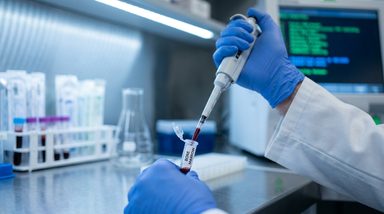
Immune Score Predicts Infection Risk in Multiple Myeloma
A three-factor immune profile identifies patients with a 60% infection incidence, offering a path to personalized prophylaxis.
-

Evolocumab Reduces First Cardiovascular Events in High-Risk Diabetes
In patients with diabetes and no known atherosclerosis, adding evolocumab to statins lowered the 5-year risk of major events by 2.1%.
-

Delayed Angiography Safe in Cardiac Arrest Without ST-Segment Elevation
Five-year COACT trial data show no survival difference between immediate and delayed coronary angiography for resuscitated patients.
-

Balanced Transfusion Reduces Trauma Mortality After Six Red Cell Units
A 4,858-patient analysis identifies the specific volume thresholds where 1:1 plasma ratios significantly improve survival in hemorrhage.
-

Oral Nicotinamide Mononucleotide Increases Platelets in Refractory Immune Thrombocytopenia
A phase 1/2 trial shows oral NMN modulates the CD38-NAD+ axis to improve platelet counts while preserving humoral immunity.
-

Iron Bioresorbable Scaffolds Match Metallic Stents for Late Lumen Loss at Two Years
A randomized trial in China finds iron-based scaffolds achieve similar vascular patency and flow to standard stents despite higher revascularization.