
- Limited treatment options for Lassa fever (LF) prompted evaluation of favipiravir as an alternative to ribavirin.
- This randomized, open-label phase 2 trial enrolled 41 adult patients with mild-to-moderate LF in Nigeria.
- Favipiravir demonstrated reliable exposure with a maximum plasma concentration of 50.9 mg l−1 and a half-life of 10.9 hours.
- The researchers concluded favipiravir was safe and well-tolerated, with 16 of 30 drug-related adverse events in the favipiravir group, none severe.
- These findings support further optimization of favipiravir regimens for future clinical evaluation in Lassa fever treatment.
Lassa Fever: Seeking New Therapeutic Avenues
Lassa fever, a viral hemorrhagic fever endemic to West Africa, presents a persistent clinical challenge due to high case fatality rates in hospitalized patients [1, 2]. The current standard of care, ribavirin, is of questionable efficacy, with systematic reviews noting a lack of robust evidence and concerns about its ability to achieve therapeutic concentrations in patients [3, 4]. Furthermore, ribavirin carries a significant toxicity burden, particularly hematologic side effects, underscoring the urgent need for safer antiviral alternatives [5, 6]. This therapeutic gap has directed attention toward broad-spectrum antivirals like favipiravir, which has demonstrated preclinical activity against Lassa virus and efficacy in treating other RNA viruses, prompting its evaluation in a clinical setting [5, 7, 8, 9, 10, 11].
Trial Design and Patient Characteristics
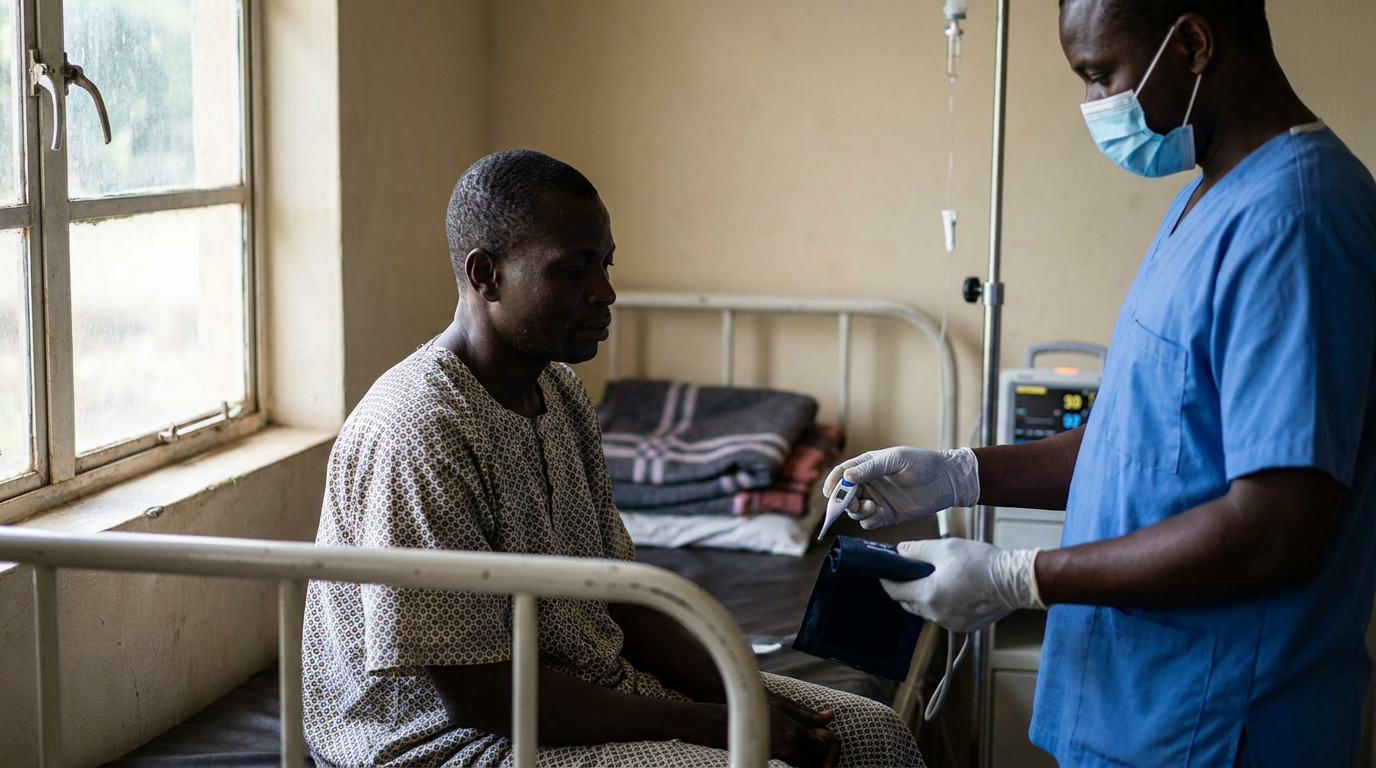
To address the need for improved Lassa fever treatments, a randomized, controlled, open-label phase 2 trial was conducted at two reference hospitals in Nigeria. The study was designed to directly compare the safety, tolerability, and pharmacokinetic profile of favipiravir against the standard-of-care, ribavirin. Investigators enrolled hospitalized adult patients with mild-to-moderate Lassa fever confirmed by reverse transcription polymerase chain reaction (RT-PCR). A total of 41 patients were randomized, with 21 assigned to the ribavirin arm and 20 to the favipiravir arm. The cohort had a median age of 37 years, and 19 participants (46.3%) were female. Of the initial group, 36 patients completed the full 10-day follow-up period. The trial is registered on Clinicaltrials.gov under the identifier NCT04907682.
Pharmacokinetic Profile of Favipiravir
The study successfully characterized the behavior of favipiravir in patients with acute Lassa fever. Pharmacokinetic analysis, using a one-compartment model (a standard method for describing a drug's absorption and elimination as if the body were a single, uniform unit), demonstrated reliable drug exposure. The findings showed a maximum plasma concentration of favipiravir at steady state of 50.9 (interquartile range, IQR, 42.1 to 75.1) mg l−1. The drug’s half-life was 10.9 (IQR 8.2 to 17.1) hours, and the total drug exposure over the treatment course, measured as the area under the curve (AUC) from 0 to 240 hours, was 9,275 (IQR 7,139.4 to 15,794.8) mg l−1 h−1. These parameters confirm that the dosing regimen achieved substantial and sustained drug levels, providing a critical data foundation for optimizing treatment protocols in future studies.
Safety and Tolerability Findings
In the comparative safety analysis, a total of 30 drug-related treatment-emergent adverse events were recorded, distributed almost evenly between the two arms. The favipiravir group accounted for 16 (53.5%) of these events. Critically for its clinical potential, none of the adverse events in the favipiravir group were classified as severe or serious. The side-effect profiles for the two drugs were distinct. Consistent with its known toxicities, anemia was the most frequently observed adverse event in the ribavirin arm. In contrast, vomiting was the most common adverse event in the favipiravir arm. This distinction is clinically relevant, as the hematologic toxicity of ribavirin can be a significant management challenge, whereas the primary side effect of favipiravir in this trial was gastrointestinal and non-severe.
Clinical Implications and Future Directions
Perhaps the most significant outcome of this phase 2 trial was that all study participants in both arms survived and were successfully discharged. For a disease with high mortality, this 100% survival rate in a cohort with mild-to-moderate illness is a vital piece of context. When combined with the safety data, the findings establish favipiravir as a well-tolerated potential alternative to ribavirin. For clinicians in endemic regions, having an option that avoids the risk of severe anemia could represent a meaningful improvement in managing Lassa fever, particularly when intensive hematologic monitoring is not readily available. The pharmacokinetic data provide a clear path forward, enabling the design of future trials with dosing regimens optimized to maximize antiviral activity while maintaining the favorable safety profile observed here. This study provides the necessary groundwork for further evaluation of favipiravir as a core component of Lassa fever treatment.
References
1. Erameh C, Okwaraeke K, Kleist C, et al. Favipiravir for Lassa fever: an open-label, randomized controlled phase 2 trial. Nature Medicine. 2026. doi:10.1038/s41591-026-04402-w
2. Besson ME, Pépin M, Metral P. Lassa Fever: Critical Review and Prospects for Control. Tropical Medicine and Infectious Disease. 2024. doi:10.3390/tropicalmed9080178
3. Cheng H, French CE, Salam AP, et al. Lack of Evidence for Ribavirin Treatment of Lassa Fever in Systematic Review of Published and Unpublished Studies1. Emerging infectious diseases. 2022. doi:10.3201/eid2808.211787
4. Salam AP, Duvignaud A, Jaspard M, et al. Ribavirin for treating Lassa fever: A systematic review of pre-clinical studies and implications for human dosing. PLoS neglected tropical diseases. 2022. doi:10.1371/journal.pntd.0010289
5. Emerer C, Okwaraeke K, Pahlmann M, et al. Safety and tolerability of Favipiravir compared to Ribavirin for the treatment of Lassa fever: A randomized controlled open-label phase II clinical trial. Journal of interventional epidemiology and public health. 2025. doi:10.37432/jieph-confpro5-00026
6. Jaspard M, Fritzell C, Juchet S, Ramharter M, Okogbenin S, Group ISGIS. The INTEGRATE study: An adaptive platform trial for the development of new interventions to combat Lassa Fever in West Africa. Journal of interventional epidemiology and public health. 2025. doi:10.37432/jieph-confpro5-00023
7. Li H, Jiang X, Cui N, et al. Clinical effect and antiviral mechanism of T-705 in treating severe fever with thrombocytopenia syndrome. Signal Transduction and Targeted Therapy. 2021. doi:10.1038/s41392-021-00541-3
8. Madelain V, Mentré F, Baize S, et al. Modeling Favipiravir Antiviral Efficacy Against Emerging Viruses: From Animal Studies to Clinical Trials. CPT Pharmacometrics & Systems Pharmacology. 2020. doi:10.1002/psp4.12510
9. Ibrahim N, Al-garawi Z. Effect of Favipiravir on some epidemic infections: A mini review. 2021. doi:10.1088/1742-6596/1853/1/012067
10. Duvignaud A, Jaspard M, Etafo IC, et al. Lassa fever clinical course and setting a standard of care for future randomized trials: A protocol for a cohort study of Lassa-infected patients in Nigeria (LASCOPE). Travel Medicine and Infectious Disease. 2020. doi:10.1016/j.tmaid.2020.101557
11. Bourner J, Salam AP, Jaspard M, et al. The West Africa Lassa fever Consortium pre-positioned protocol for a Phase II/III adaptive, randomised, controlled, platform trial to evaluate multiple Lassa fever therapeutics. Wellcome Open Research. 2023. doi:10.12688/wellcomeopenres.19041.2