
- The study addressed whether brain patterns in offspring resembling affected parents hold clinical significance for psychotic disorders.
- Researchers used 3T MRI data from 73 offspring (ages 15-35) to quantify cortical thickness similarities via a Familial Vulnerability Index (FVI).
- Offspring with a psychotic disorder had significantly higher FVIs (q=0.001, d=2.84) than those without a diagnosis.
- The authors concluded that the Familial Vulnerability Index demonstrates clinical significance in young offspring of individuals with psychosis.
- Future research on family-level similarities across modalities may advance risk and prognostic prediction in serious mental illness.
Mapping Familial Brain Vulnerability in Psychotic Disorders
Psychotic disorders, including schizophrenia and bipolar disorder with psychotic features, are complex conditions with significant heritable components, placing offspring of affected individuals at an elevated risk [1, 2]. While environmental factors like childhood adversity (with an overall effect of OR = 2.78 for psychosis risk) [3] and cannabis use [4] also contribute to risk, genetic predisposition plays a substantial role in disease susceptibility and brain alterations [5]. Structural brain abnormalities, such as reduced cortical thickness and changes in gray matter volume, are well-documented in individuals with psychosis, even in first-episode presentations [6, 7, 8], with verbal memory showing the largest impairment (Cohen's d effect size = 2.10) [8]. These neurobiological changes are often linked to worse clinical and cognitive outcomes, underscoring the need for early identification of vulnerability [7, 8]. A new study now offers fresh insights into how familial brain patterns might serve as indicators of risk in young individuals [9].
Quantifying Familial Brain Patterns: The Familial Vulnerability Index
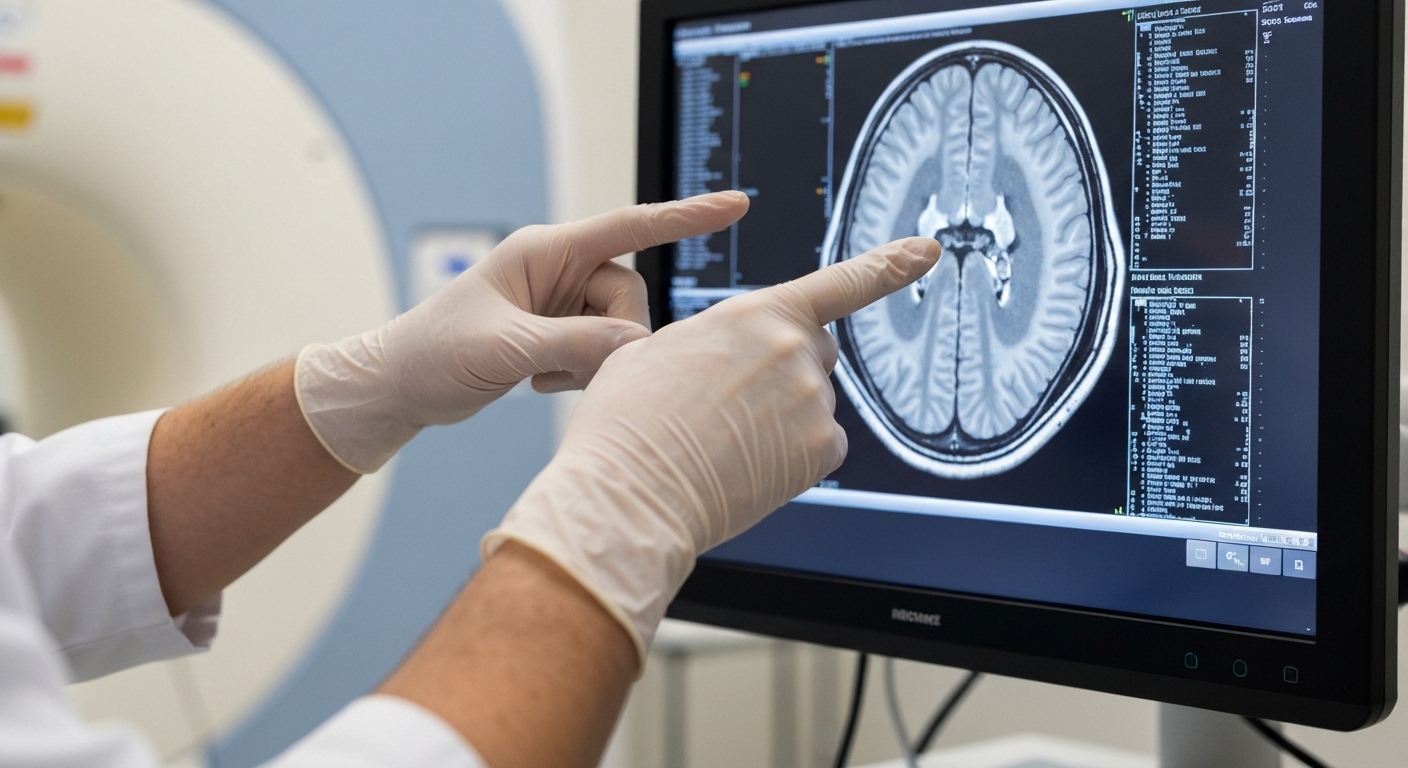
Familial high-risk offspring represent a critical population for understanding and predicting individual-level risk for psychotic disorders, offering a unique opportunity to forecast potential brain pathology should they develop psychosis, mirroring their own parents' brain pathology. To address this, the study aimed to quantify parent-offspring brain similarities in psychotic disorders and to explore the clinical significance of these similarities. The researchers utilized 3T magnetic resonance imaging data from the Bipolar Schizophrenia Network on Intermediate Phenotypes (BSNIP)-1 Study. This cohort comprised 73 offspring, aged 15 to 35 years, and their own affected parents who had a diagnosis of psychosis.
Cortical thickness similarities between these offspring and their affected parents were quantified using a novel metric called the Familial Vulnerability Index (FVI). This index was calculated by examining region-wise z-scores, essentially measuring how much an offspring's cortical thickness in specific brain regions deviated from the average pattern observed in their affected parent. The researchers then compared these FVIs to the ENIGMA-derived cortical Regional Vulnerability Index (RVI) in the offspring. Both FVIs and RVIs were subsequently examined in relation to the presence or absence of psychiatric symptoms in the offspring, and their associations with global functioning and cognitive performance were assessed.
FVI: A Marker for Psychiatric Diagnosis and Global Functioning
The study's findings indicate that the Familial Vulnerability Index (FVI), a measure of cortical thickness similarity between offspring and their affected parents, holds significant clinical relevance. Researchers observed that offspring had higher FVIs than ENIGMA-derived cortical Regional Vulnerability Indices (RVIs), a difference that was statistically robust (q<0.001, d=0.78). This initial comparison suggests that the FVI captures a distinct aspect of familial brain patterns not reflected by the RVI, which assesses individual cortical vulnerability against a general population reference.
Further analysis revealed a strong association between FVI and psychiatric diagnoses in the offspring. Specifically, offspring diagnosed with a psychotic disorder exhibited significantly higher FVIs compared to offspring with no psychiatric diagnosis (q=0.001, d=2.84). The clinical utility of FVI extended beyond psychotic disorders, as offspring with any other psychiatric diagnosis also demonstrated higher FVIs than those without a psychiatric diagnosis (q=0.02, d=1.40). Importantly, the RVIs did not show any significant differences between these offspring groups, underscoring the specificity of FVI in identifying familial vulnerability linked to psychiatric conditions. Beyond diagnosis, the FVI also correlated with functional outcomes: FVIs, but not RVIs, were negatively correlated with global functioning (r =-0.31, q=0.047), indicating that higher familial brain pattern similarity was associated with poorer overall functioning. However, neither FVIs nor RVIs were correlated with cognitive performance in the offspring cohort.
Clinical Implications and Future Directions
This investigation serves as a proof-of-concept study, establishing a foundational understanding of how familial brain patterns relate to psychiatric risk. The findings demonstrate the clinical significance of the Familial Vulnerability Index (FVI) in young offspring of individuals with psychotic disorders, providing a quantifiable marker that correlates with psychiatric diagnoses and global functioning. For clinicians, this suggests that assessing the similarity of cortical thickness patterns between an affected parent and their at-risk offspring could offer an objective measure to identify individuals at higher risk for developing a psychotic disorder or other psychiatric conditions, even before overt symptoms fully manifest.
The implications extend beyond early identification. The researchers emphasize that future research on the clinical utility of family-level similarities across various modalities, such as structural, functional, and molecular imaging, holds substantial potential to advance both risk and prognostic prediction in families affected by serious mental illness. Such advancements could lead to more personalized risk stratification, allowing for targeted preventative interventions or earlier therapeutic strategies for at-risk youth. By integrating these family-level brain pattern analyses into clinical practice, physicians may gain a more nuanced understanding of an individual's inherited vulnerability, moving towards a more precise and proactive approach to mental health care.
References
1. Misiak B, Stramecki F, Gawęda Ł, et al. Interactions Between Variation in Candidate Genes and Environmental Factors in the Etiology of Schizophrenia and Bipolar Disorder: a Systematic Review. Molecular Neurobiology. 2017. doi:10.1007/s12035-017-0708-y
2. Smieskova R, Marmy J, Schmidt A, et al. Do Subjects at Clinical High Risk for Psychosis Differ from those with a Genetic High Risk? - A Systematic Review of Structural and Functional Brain Abnormalities. Current Medicinal Chemistry. 2013. doi:10.2174/0929867311320030018
3. Varese F, Smeets F, Drukker M, et al. Childhood Adversities Increase the Risk of Psychosis: A Meta-analysis of Patient-Control, Prospective- and Cross-sectional Cohort Studies. Schizophrenia Bulletin. 2012. doi:10.1093/schbul/sbs050
4. Batalla A, Bhattacharyya S, Yücel M, et al. Structural and Functional Imaging Studies in Chronic Cannabis Users: A Systematic Review of Adolescent and Adult Findings. PLoS ONE. 2013. doi:10.1371/journal.pone.0055821
5. Harari JH, Díaz-Caneja CM, Janssen J, Martínez K, Arias B, Arango C. The association between gene variants and longitudinal structural brain changes in psychosis: a systematic review of longitudinal neuroimaging genetics studies.. NPJ schizophrenia. 2017. doi:10.1038/s41537-017-0036-2
6. Kose M, Pariante CM, Dazzan P, Mondelli V. The Role of Peripheral Inflammation in Clinical Outcome and Brain Imaging Abnormalities in Psychosis: A Systematic Review.. Frontiers in psychiatry. 2021. doi:10.3389/fpsyt.2021.612471
7. Díaz‐Caneja CM, Pina‐Camacho L, Rodríguez-Quiroga A, Fraguas D, Parellada M, Arango C. Predictors of outcome in early-onset psychosis: a systematic review. Schizophrenia. 2015. doi:10.1038/npjschz.2014.5
8. Aas M, Dazzan P, Mondelli V, Melle I, Murray R, Pariante CM. A Systematic Review of Cognitive Function in First-Episode Psychosis, Including a Discussion on Childhood Trauma, Stress, and Inflammation. Frontiers in Psychiatry. 2014. doi:10.3389/fpsyt.2013.00182
9. Türközer HB, Tamminga CA, Fitzmaurice G, et al. Family-level Brain Pattern Similarities and Their Clinical Significance in Young Offspring of Individuals with Psychotic Disorders.. Biological psychiatry. Cognitive neuroscience and neuroimaging. 2026. doi:10.1016/j.bpsc.2026.05.001