
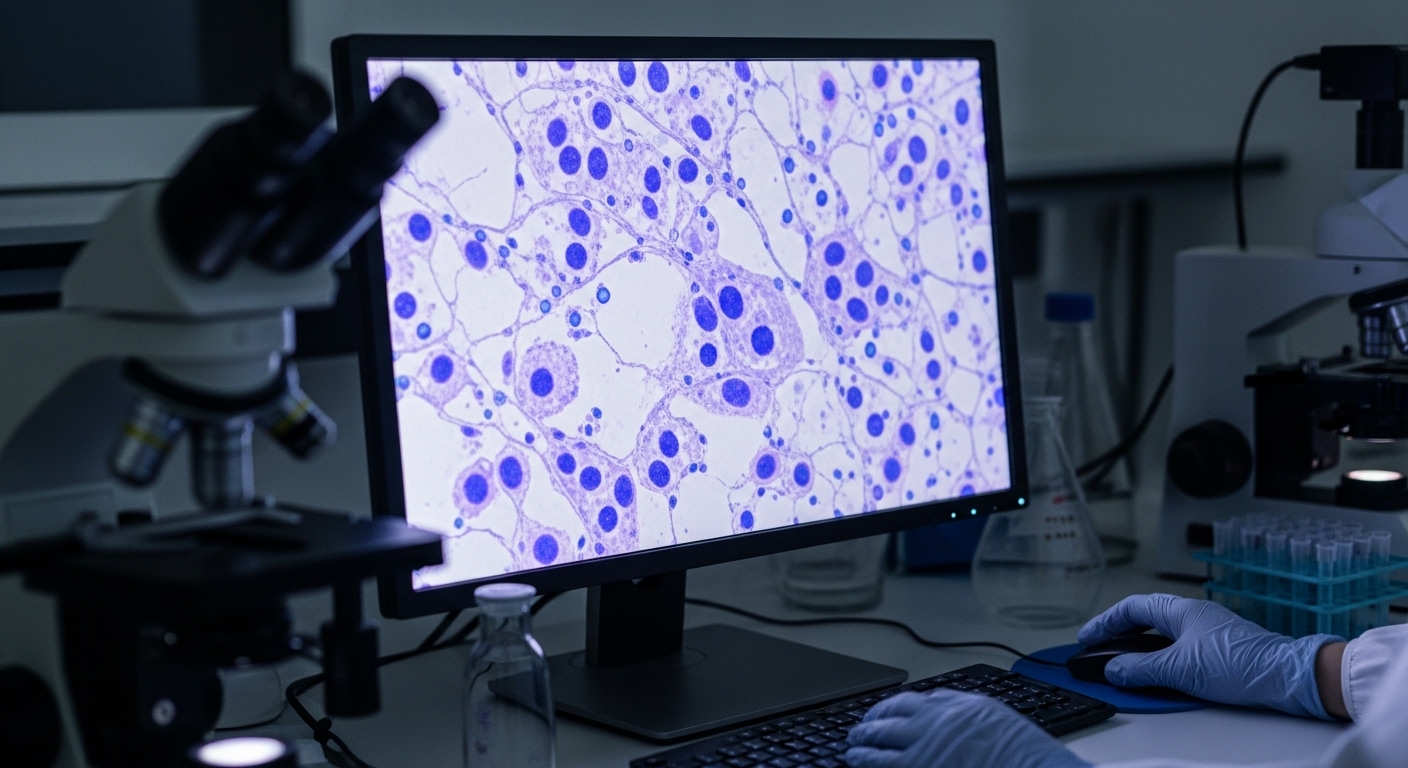
- The study investigated acetate's impact on microglial inflammation in traumatic brain injury models, a previously unexamined area.
- Researchers used in vitro EOC20 mouse microglial cells in lipopolysaccharide and mechanical stretch models.
- Physiological acetate doses (100 µM and 300 µM) significantly reduced tumor necrosis factor-alpha production in stretched microglia.
- The authors concluded that acetate exhibits anti-inflammatory effects in microglial stretch injury, but not in lipopolysaccharide stimulation.
- Further research is needed to determine acetate's therapeutic potential for sterile neuroinflammation, such as traumatic brain injury.
Navigating Neuroinflammation: The Gut-Brain Axis and Microglial Responses
Neuroinflammation is a central pathological process in conditions ranging from neurodegenerative diseases to traumatic brain injury (TBI), driven largely by microglia, the resident immune cells of the central nervous system [1, 2, 3]. These cells can either protect or harm brain tissue depending on their activation state [2, 4]. A growing body of evidence points to the microbiota-gut-brain axis, a communication network between gut microbes and the brain, as a key regulator of microglial function through metabolites like short-chain fatty acids (SCFAs) [5, 6, 7]. A recent in vitro study provides new clarity on this relationship, investigating how the SCFA acetate influences microglial inflammation in different injury contexts. The findings demonstrate that physiological concentrations of acetate (100 µM and 300 µM) significantly reduced tumor necrosis factor-alpha (TNFα) production in a model of TBI but had no effect in a model of sepsis-like inflammation [8]. This context-dependent effect suggests that gut-derived metabolites may offer a therapeutic avenue for sterile neuroinflammation, a common feature of TBI [8, 9, 10].
Microglia: Dual Roles and Gut-Derived Modulators
Microglia are the primary guardians of central nervous system homeostasis, constantly surveying the neural microenvironment. When activated by injury or pathogens, however, they adopt a dual role, capable of both orchestrating repair and driving destructive neuroinflammation through the release of pro-inflammatory mediators. The factors that tip this balance are of intense clinical interest. Among these modulators are short-chain fatty acids (SCFAs), such as acetate, which are produced by gut bacteria and serve as signaling molecules that influence microglial maturation and metabolism. Previous work suggested acetate could curb inflammation in microglia stimulated by lipopolysaccharide (LPS), a component of bacterial cell walls used to create a laboratory model of sepsis. However, a critical knowledge gap existed regarding its effects in other forms of brain injury. The current study was designed to address this by being the first to examine acetate's impact on mechanically stretched microglia, an in vitro model that simulates the cellular shearing and damage characteristic of traumatic brain injury (TBI).
Investigating Acetate's Impact Across Neuroinflammatory Models
To dissect the role of acetate in different inflammatory scenarios, researchers utilized two distinct in vitro systems with EOC20 mouse microglial cells. The first model mimicked a sepsis-like response by stimulating the cells with lipopolysaccharide. The second simulated traumatic brain injury (TBI) by subjecting the cells to mechanical stretching. In both models, the microglia were exposed to acetate at physiological concentrations relevant to the in vivo environment, as well as a higher experimental dose, to assess dose-dependent effects. The investigators then measured several key indicators of the inflammatory response and cell health. They used assays for cell death to ensure the treatments were not toxic, assays for cytokine production to quantify the release of inflammatory molecules like TNFα, and assays for inducible nitric oxide synthase (iNOS) expression, a key enzyme that generates nitric oxide and contributes to inflammatory tissue damage.
Differential Anti-inflammatory Effects of Acetate
The study revealed that acetate's influence on microglia is highly dependent on the nature of the inflammatory trigger. In the sepsis model, where inflammation was induced by lipopolysaccharide, acetate failed to produce an anti-inflammatory effect. It did not reduce the secretion of pro-inflammatory cytokines or the intracellular expression of inducible nitric oxide synthase (iNOS). This suggests that in the context of a bacteria-driven inflammatory response, acetate may not be an effective modulator. In stark contrast, acetate showed a clear anti-inflammatory capacity in the TBI model. In microglia subjected to mechanical stretching, physiological doses of acetate (100 µM and 300 µM) significantly reduced the production of tumor necrosis factor-alpha (TNFα). Critically, this beneficial effect was achieved without harming the cells, as acetate did not affect cell viability at these concentrations. Delving into the mechanism, the researchers found that the stretch injury promoted the movement of NF-κB into the cell nucleus, a key step in activating inflammatory gene expression. This process was attenuated with physiological doses of sodium acetate, pointing to a specific pathway through which acetate exerts its protective effect in mechanical injury.
Clinical Implications and Future Directions
The finding that acetate selectively reduces inflammation in a model of traumatic brain injury (TBI), but not in a sepsis model, has important clinical implications. It suggests that the therapeutic utility of gut-derived metabolites may depend on the specific cause of neuroinflammation. For clinicians managing patients with TBI, this research points toward the potential of targeting the gut-brain axis to mitigate sterile inflammation, which is driven by tissue damage rather than pathogens and is a major contributor to secondary injury. The study's demonstration that physiological acetate concentrations can reduce tumor necrosis factor-alpha (TNFα) production and attenuate NF-κB nuclear localization provides a mechanistic rationale for its use. These pathways are well-established drivers of inflammation and are targets for therapies in other systemic inflammatory diseases. Therefore, further investigation into acetate's regulatory role in sterile neuroinflammatory conditions is warranted. Such work could validate its therapeutic potential for TBI and may eventually inform the development of dietary or microbial-based strategies to improve outcomes following brain trauma.
References
1. Kwon HS, Koh S. Neuroinflammation in neurodegenerative disorders: the roles of microglia and astrocytes. Translational Neurodegeneration. 2020. doi:10.1186/s40035-020-00221-2
2. Kettenmann H, Hanisch U, Noda M, Verkhratsky A. Physiology of Microglia. Physiological Reviews. 2011. doi:10.1152/physrev.00011.2010
3. Sweeney MD, Zhao Z, Montagne A, Nelson AR, Zloković BV. Blood-Brain Barrier: From Physiology to Disease and Back. Physiological Reviews. 2018. doi:10.1152/physrev.00050.2017
4. Cherry JD, Olschowka JA, O’Banion MK. Neuroinflammation and M2 microglia: the good, the bad, and the inflamed. Journal of Neuroinflammation. 2014. doi:10.1186/1742-2094-11-98
5. Cryan JF, O’Riordan KJ, Cowan CS, et al. The Microbiota-Gut-Brain Axis. Physiological Reviews. 2019. doi:10.1152/physrev.00018.2018
6. Silva YP, Bernardi A, Frozza RL. The Role of Short-Chain Fatty Acids From Gut Microbiota in Gut-Brain Communication. Frontiers in Endocrinology. 2020. doi:10.3389/fendo.2020.00025
7. Yan M, Man S, Sun B, et al. Gut liver brain axis in diseases: the implications for therapeutic interventions. Signal Transduction and Targeted Therapy. 2023. doi:10.1038/s41392-023-01673-4
8. Yang Q, Dave A, Clark RSB, Bayır H, Simon D. Differential effects of the microbial metabolite acetate on murine microglia in in vitro sepsis and trauma models.. Brain research. 2026. doi:10.1016/j.brainres.2026.150217
9. Davis BT, Han H, Islam MBAR, et al. Short-Chain Fatty Acid Supplementation After Traumatic Brain Injury Attenuates Neurologic Injury Via the Gut-Brain-Microglia Axis.. Shock (Augusta, Ga.). 2026. doi:10.1097/SHK.0000000000002706
10. Cook AM, Jones GM, Hawryluk GWJ, et al. Guidelines for the Acute Treatment of Cerebral Edema in Neurocritical Care Patients. Neurocritical Care. 2020. doi:10.1007/s12028-020-00959-7