
The Briefing · Emergency & Critical Care
Continuous newsroom coverage of evidence in Emergency & Critical Care — newest first.
Earlier
24 stories-
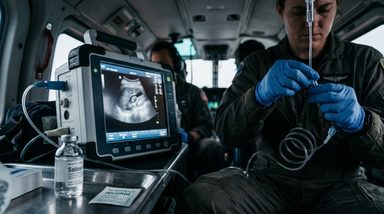
Prophylactic Antiemetics Fail to Reduce Opioid-Induced Nausea in Prehospital Trauma
A prospective study of 205 HEMS patients shows no benefit for routine intravenous ondansetron or isopropanol aromatherapy.
-

Awake Mapping for Grade 2 Glioma Reduces Intractable Epilepsy Burden
Extensive resection of IDH-mutant tumors improves seizure freedom and return-to-work rates, particularly for insular lesions.
-

Taekwondo and Football 5-a-Side Show Highest Injury Risk at Paris Paralympics
Prospective surveillance of 4,450 athletes reveals significant sex-based and sport-specific variations in injury burden and illness rates.
-

Ivermectin Fails to Improve Outcomes in Hospitalized COVID-19 Patients
A randomized trial shows no benefit for organ support-free days or survival in critically and noncritically ill patients.
-
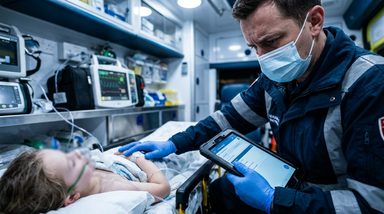
AI Protocol Support Shows 75% Accuracy in Simulated Prehospital Emergencies
A simulation study using Gemini 2.5 Flash found significant gaps in pediatric cardiac arrest recommendations despite overall accuracy.
-

Intravenous Ketamine Reduces Suicidal Ideation and Depression for One Month
A meta-analysis of 26 trials shows rapid symptom relief within four hours and sustained antisuicidal effects following intravenous infusion.
-

Standard Weight Formulas Overestimate Lung Size in Critically Ill Women
A large-scale analysis reveals that current tidal volume guidelines increase driving pressures and mortality risk for female patients.
-
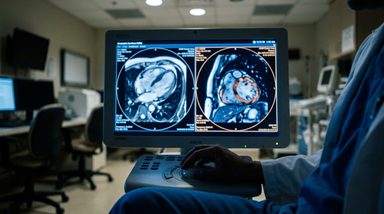
Contrast-Free Cine MRI Synthesizes High-Quality Myocardial Enhancement Images
A diffusion-based model generates synthetic late gadolinium enhancement images with high diagnostic accuracy across multiple centers.
-
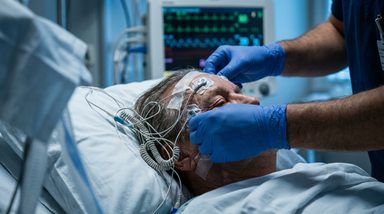
Identical EEG Bursts Signal Severe Loss of Brain Network Complexity
A multi-model study identifies identical burst suppression as a default state of simplified excitatory networks in irreversible coma.
-

Robotic Pancreatoduodenectomy Increases Hemorrhage Risk Despite Fewer Fistulas
A multicenter study of 1,925 patients finds robotic surgery carries a 63% higher risk of bleeding compared to open procedures.
-

Inflammatory Metabolite Index Predicts Ischemic Stroke Risk in Women
A signature of 102 metabolites, primarily lysophosphatidylcholines, identifies elevated stroke risk independently of traditional factors.
-
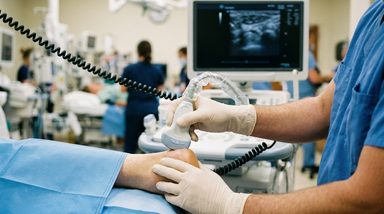
Individualized Algorithm Lowers Achilles Rerupture Risk and Limits Unnecessary Surgery
The CARTA protocol uses ultrasound criteria to select patients for surgery, reducing reruptures by 73% compared to non-operative management.
-

Sustained Vigorous Activity Linked to Higher Stroke Risk in Hypertensive Adults
Wearable data shows that while moderate activity is protective, vigorous bouts exceeding two minutes may triple stroke risk in hypertension.
-
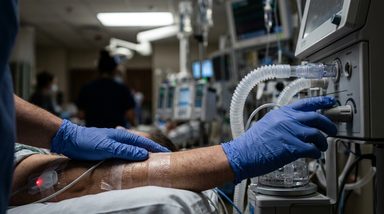
ProVent Score Predicts One-Year Mortality at Day Seven of Ventilation
A retrospective study of 1,344 ICU patients shows the ProVent score remains accurate when applied earlier than the standard 14-day mark.
-

Higher Ivermectin Dose Does Not Improve Severe Scabies Cure Rates
A randomized trial shows 400 μg/kg of ivermectin plus permethrin is not superior to the standard 200 μg/kg dose for crusted scabies.
-

Case Series Links RibXcar Puncture Technique to Six Fatalities
A multinational review identifies visceral injury and thromboembolism as primary causes of death following minimally invasive rib remodeling.
-

Noncardiac Death Risk Limits Cardiovascular Prognosis in Type 2 Infarction
A meta-analysis of 120,734 patients shows that high noncardiovascular mortality competes with ischemic risk in Type 2 myocardial injury.
-

Ketamine Shows No Sustained Hemodynamic Advantage Over Propofol During Intubation
A randomized trial in critically ill patients found that ketamine-induced blood pressure benefits were transient and did not improve survival.
-

Lower Rugby Tackle Height Reduces Ball-Carrier Risk but May Increase Tackler Impacts
A simulation of 23,081 tackles suggests that mandating lower hits redistributes neurotrauma risk between players rather than eliminating it.
-

Enhanced Recovery Protocols Reduce Length of Stay in Frail Bypass Patients
A retrospective study shows high frailty does not impede protocol compliance and significantly lowers reintervention rates and hospital stay.
-

MRNA Influenza Vaccine Reduces Infection Risk in Adults Over 50
A phase 3 trial found mRNA-1010 superior to standard vaccines, though it caused more frequent transient systemic reactions.
-

Mothers Report Gaps in Prenatal Counseling and Neonatal Realities
A study of 64 mothers finds that 32 percent experienced inconsistencies between antenatal consultations and neonatal intensive care.
-
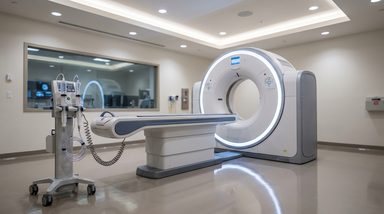
Photon Counting CT Maintains TAVR Image Quality with 37.5% Less Contrast
Low-energy virtual monoenergetic reconstructions compensate for reduced iodine volume, improving signal-to-noise ratios in TAVR planning.
-

Peer Feedback Reduces Chest Pain Admissions Among High-Admitting Clinicians
Individualized performance data combined with protocols lowered admission rates by up to 14.3 percent for high-utilizing physicians.