
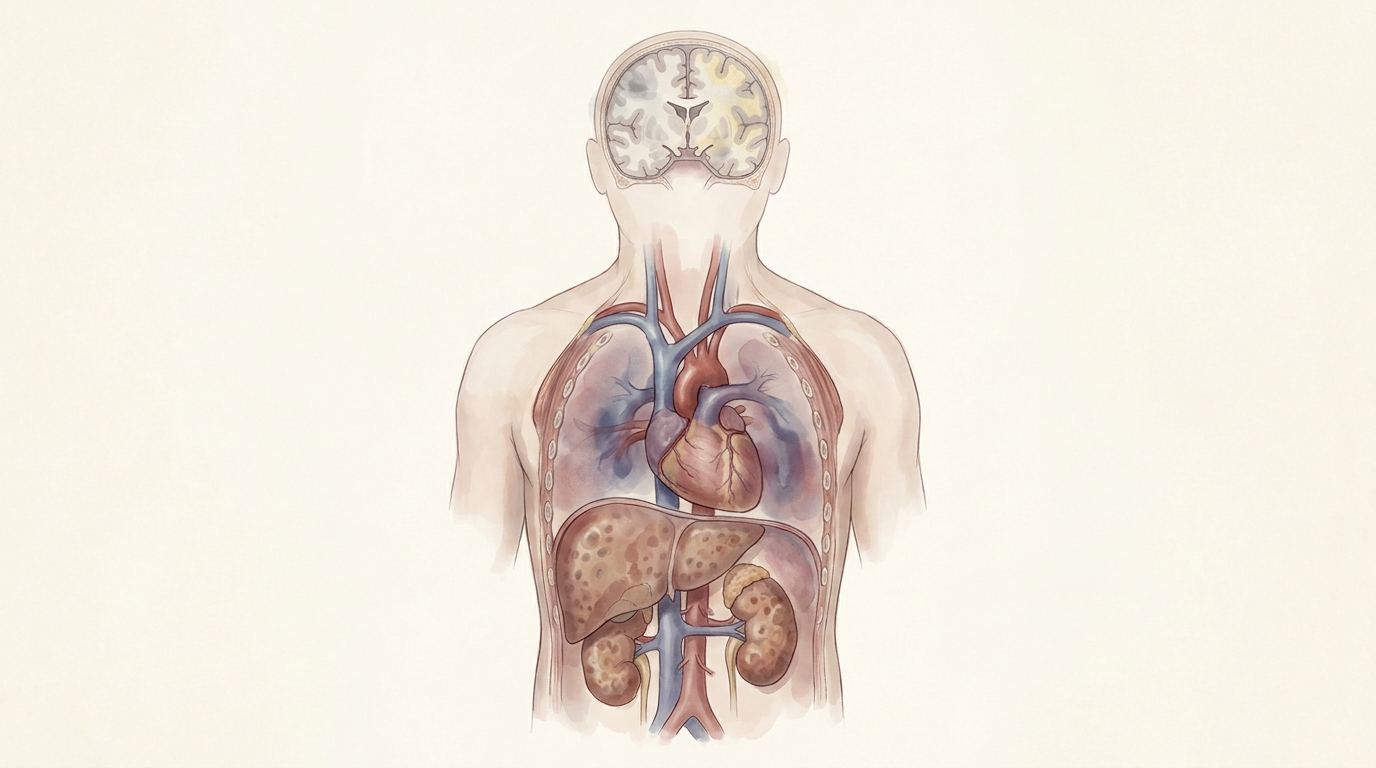
The European Resuscitation Council (ERC) and the European Society of Intensive Care Medicine (ESICM) have released their 2025 guidelines for post-resuscitation care, building on the latest International Consensus on Cardiopulmonary Resuscitation Science. This update offers critical refinements across diagnosis, management, and prognostication, aiming to optimize outcomes for cardiac arrest survivors. Clinicians will find actionable guidance on navigating complex post-arrest scenarios, from immediate imaging strategies to long-term rehabilitation planning.
Versus the Previous Version
The 2025 ERC/ESICM guidelines for post-resuscitation care introduce several key updates, reflecting new evidence and a refined approach to patient management compared to the 2021 version. These changes impact initial diagnostic pathways, temperature management terminology, and long-term care strategies.
Practice Notes
These practical considerations highlight critical aspects of post-resuscitation care that demand careful attention in daily practice.
Key Recommendations
The following key recommendations from the ERC/ESICM 2025 guidelines provide actionable guidance for managing adult patients after cardiac arrest. They cover critical decisions from initial diagnosis and physiological support to neurological prognostication and long-term recovery, aiming to improve patient outcomes in daily clinical practice.
In adult patients with ROSC after cardiac arrest of suspected cardiac origin with persistent ST-elevation on the ECG., perform emergent cardiac catheterisation laboratory evaluation (and primary percutaneous coronary intervention (PPCI) if required).
In adult patients with ROSC after out-of-hospital cardiac arrest (OHCA) without ST-elevation on the ECG, where clinical context suggests a high likelihood of acute coronary occlusion., strongly consider immediate coronary angiography.
In patients with signs or symptoms pre-arrest suggesting a non-coronary cause (e.g., headache, seizures, neurological deficits, shortness of breath, documented hypoxemia, abdominal pain)., perform a dual phase whole body tomography (CT) scan (including head, neck, chest, abdomen, pelvis, and CT pulmonary angiography) before or after coronary angiography if indicated.
In patients who remain comatose following ROSC, or who have another clinical indication for sedation and mechanical ventilation., have their trachea intubated if this has not been done already during CPR.
In adults with ROSC after cardiac arrest in any setting, once SpO2 can be measured reliably or arterial blood gas values are obtained., titrate the inspired oxygen to achieve an arterial oxygen saturation of 94–98% or arterial partial pressure of oxygen (PaO2) of 10–13 kPa (75–100 mmHg).
In mechanically ventilated patients with ROSC after cardiac arrest., target normocapnia – a partial pressure of carbon dioxide of 4.7–6.0 kPa (or approximately 35–45 mmHg).
In all patients after cardiac arrest., avoid hypotension and target a mean arterial pressure (MAP) >60–65 mmHg.
In patients with arrhythmia immediately after ROSC., follow the ERC Guidelines 2025 Adult Advanced Life Support for peri-arrest arrhythmia.
In patients who remain comatose after ROSC from cardiac arrest., actively prevent fever by targeting a temperature <37.5 °C.
In comatose patients after resuscitation from cardiac arrest., perform neurological prognostication using clinical examination, electrophysiology, biomarkers, and imaging.
In unconscious patients at 72 hours from ROSC, in the absence of confounders, where poor outcome is likely., identify poor outcome if two or more of the following predictors are present: no pupillary and corneal reflexes at 72h, bilaterally absent N20 SSEP wave at 24h, highly malignant EEG at >24h, NSE >60 mg/L at 48h and/or 72h, status myoclonus 72h, or diffuse and extensive anoxic injury on brain CT/MRI.
In patients who are comatose after cardiac arrest., use electroencephalography (EEG) to diagnose electrographic seizures in patients with clinical convulsions and to monitor treatment effects.
In adult patients with non-traumatic OHCA., consider for transport to a cardiac arrest centre for post-resuscitation care, whenever possible, according to local protocols.
In all patients who have restoration of circulation after CPR and who subsequently progress to death., be evaluated for organ donation.