
- Researchers investigated whether mutations in the EIPR1 protein, which regulates intracellular protein trafficking, cause specific human neurodevelopmental disorders.
- The study identified five homozygous missense variants in eight individuals from six unrelated families presenting with complex neurological symptoms.
- Patients exhibited five specific EIPR1 variants that impaired endosomal recycling and dense core vesicle biogenesis in patient-derived fibroblasts and neurons.
- The authors concluded that EIPR1 is a critical genetic locus for a syndrome involving microcephaly, ataxia, spasticity, and neutropenia.
- Clinicians should consider EIPR1 mutations when evaluating patients with unexplained neurodevelopmental delay accompanied by cerebellar atrophy and neutropenia.
Expanding the Genetic Map of Vesicular Trafficking Disorders
The diagnostic landscape for pediatric neurodevelopmental disorders is expanding as clinicians identify new genetic drivers of intellectual disability and structural brain malformations [1, 2, 3]. Many of these conditions arise from defects in fundamental cellular processes, such as protein glycosylation (the biochemical process of attaching sugar chains to proteins) or synaptic scaffolding, which often manifest as multisystem syndromes involving growth retardation and dysmorphic features [4, 5]. Despite advances in exome sequencing, a significant portion of patients with global developmental delay and microcephaly, such as those with recurrent MTSS2 variants or GRM7 deficiencies, remain without a definitive molecular etiology [3, 6]. Understanding the specific pathways governing neuronal development, particularly those involving intracellular transport and protein recycling, is essential for improving prognostic accuracy and management [7, 8, 9]. A recent investigation provides a critical link between endolysosomal trafficking (the internal cellular system for sorting and transporting proteins for degradation or reuse) and a specific spectrum of neurological and hematological impairments, identifying homozygous missense variants in EIPR1 that result in neutropenia and cerebellar atrophy [7].
Clinical Presentation of EIPR1 Deficiency
The clinical characterization of this syndrome stems from the identification of eight individuals from six unrelated families who presented with a consistent multisystem phenotype. Genetic analysis revealed that these patients harbor five specific EIPR1 homozygous missense variants, which are single nucleotide substitutions that alter the resulting protein structure. These variants include NM_003310.5:c.835C>G p.(Arg279Gly), NM_003310.5:c.813C>G p.(His271Gln), NM_003310.5:c.694C>T p.(Arg232Trp), NM_003310.5:c.47G>A p.(Arg16His), and NM_003310.5:c.419T>A p.(Val140Asp). For the practicing clinician, these findings define a new autosomal recessive disorder where biallelic loss of function in the EIPR1 protein disrupts intracellular trafficking. The core clinical phenotype is characterized by global neurodevelopmental delay, microcephaly (an abnormally small head circumference), ataxia (impaired coordination), and spasticity (increased muscle tone and stiffness). Patients in the study cohort exhibited significant functional limitations, specifically walking and speech impairments, alongside dysmorphic facies (distinctive facial features that often accompany genetic syndromes).
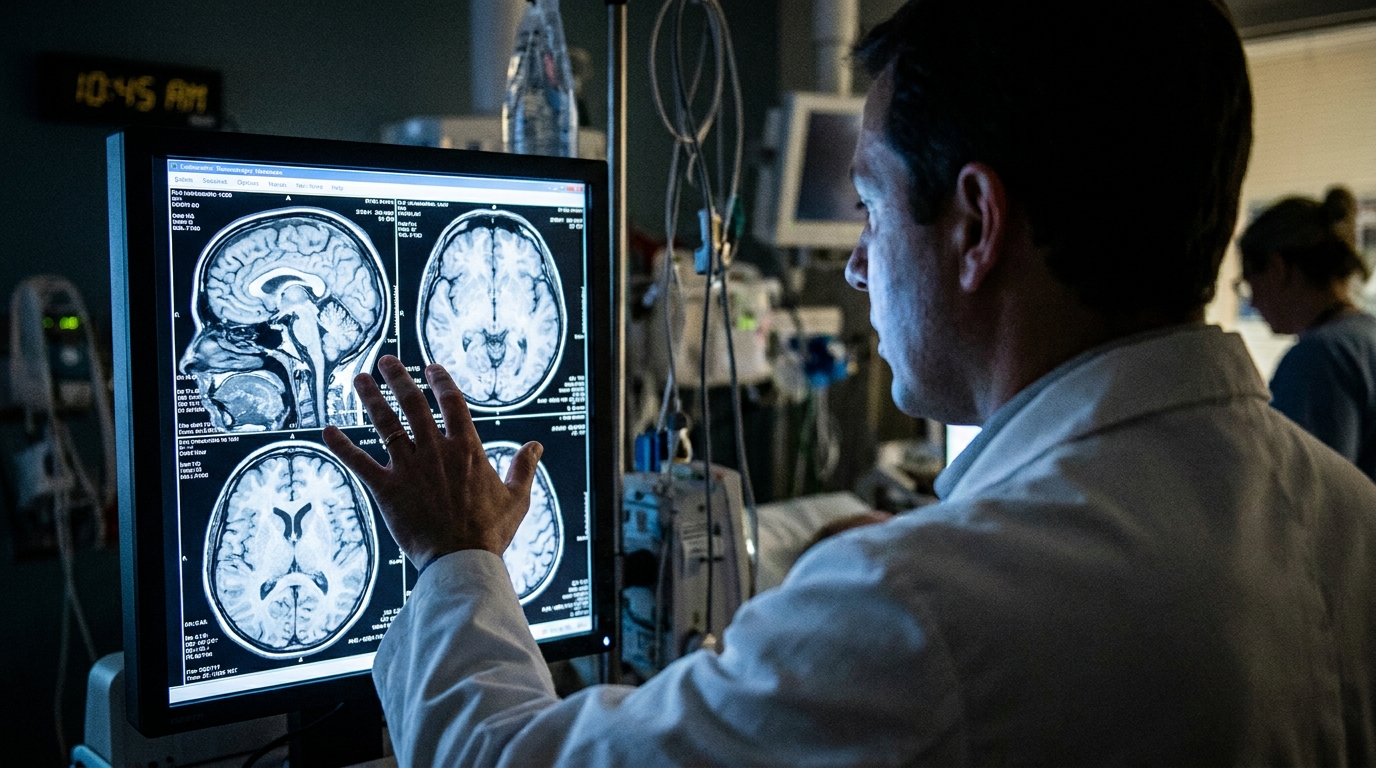
Beyond the physical examination, neuroimaging provided evidence of structural central nervous system defects. The researchers documented delayed myelination (a lag in the development of the protective fatty sheath around nerve fibers), callosal hypoplasia (an underdeveloped corpus callosum, the bridge between brain hemispheres), and cerebellar atrophy (wasting of the brain region responsible for motor control). A distinguishing feature of this EIPR1-related syndrome is the presence of neutropenia, a condition characterized by abnormally low levels of neutrophils. This hematological finding, when paired with the triad of microcephaly, ataxia, and spasticity, serves as a critical diagnostic marker for clinicians evaluating pediatric patients with unexplained developmental delays. Recognizing this specific combination of structural brain abnormalities and immune cell deficiencies allows physicians to order targeted genetic testing, providing a definitive molecular diagnosis and more precise genetic counseling for affected families.
Mechanisms of Impaired Endolysosomal Trafficking
The molecular basis of this syndrome lies in the disruption of intracellular transport pathways governed by EIPR1 (EARP-interacting protein 1), a WD40-domain protein that serves as a structural scaffold for protein-protein interactions. Under physiological conditions, EIPR1 acts as a critical regulator of vesicular trafficking by interacting with two distinct multi-subunit tethering complexes. First, it associates with the EARP (endosome-associated recycling protein) complex to facilitate the delivery of endosome-derived transmembrane cargos to the plasma membrane. Second, it interacts with the GARP (Golgi-associated retrograde protein) complex to direct similar cargos to the trans-Golgi network, a specialized sorting station within the cell. Functional analysis using a heterologous transfection system (a laboratory technique where patient-derived genetic variants are introduced into non-human cell lines to study their effects) demonstrated that these missense mutations significantly reduce EIPR1 protein levels. The researchers found that the variants also disrupt the physical interaction between EIPR1 and the EARP and GARP complexes.
In skin fibroblasts obtained from an individual harboring the Arg279Gly variant, the researchers observed a marked reduction in the recycling of internalized transferrin to the plasma membrane, a classic indicator of EARP deficiency. Furthermore, these same cells exhibited impaired retrograde transport of the internalized Shiga toxin B-subunit to the trans-Golgi network when compared with fibroblasts from an unaffected parent, confirming a concomitant GARP-deficiency phenotype. The downstream consequences of these trafficking defects manifest as significant structural and metabolic stress within the cell. Patient fibroblasts characterized in the study exhibited enlarged lysosomes, the organelles responsible for cellular waste degradation, along with increased levels of the lysosomal membrane protein LAMP1. This accumulation of lysosomal material was accompanied by elevated levels of the autophagic markers LC3B-II and SQSTM1, proteins that typically increase when the cell's internal recycling system is overwhelmed. For the clinician, these findings indicate that the neurological and hematological symptoms of EIPR1 deficiency are driven by a systemic failure of cellular waste management and protein routing, highlighting potential future therapeutic targets aimed at restoring lysosomal function.
Neuronal Dysfunction and In Vivo Validation
The pathophysiology of EIPR1 deficiency extends beyond general protein trafficking to the disruption of specialized secretory pathways in the central nervous system. Research indicates that EIPR1 cooperates with the EARP complex in the biogenesis of dense core vesicles, which are specialized secretory organelles in neurons and endocrine cells that store and release signaling molecules such as neuropeptides and monoamines. Functional assays demonstrated that the Arg279Gly and His271Gln variants reduce the ability of EIPR1 to promote EARP association with endosomes in non-neuronal cells, a critical step for proper vesicle formation. When these mutations were studied in induced pluripotent stem cell-derived neurons (adult cells reprogrammed back into an embryonic-like state and then guided to become neurons), the Arg279Gly and His271Gln variants reduced dense core vesicle biogenesis. This suggests that the clinical manifestations of ataxia and spasticity may result directly from impaired neurotransmission and regulated secretion.
To confirm the systemic impact of these molecular defects, the researchers employed a zebrafish model. The knockout of the orthologous eipr1 gene in zebrafish resulted in neurodevelopmental and locomotor defects that are consistent with the microcephaly and motor impairments observed in the human patient cohort. The pathogenicity of the specific human mutations was validated through mRNA rescue experiments. While the injection of wild-type human EIPR1 mRNA successfully rescued the neurodevelopmental and locomotor defects in the eipr1 knockout zebrafish, the mRNAs encoding the human EIPR1 variants Arg279Gly or His271Gln failed to restore normal function. These findings establish that the identified missense variants are loss-of-function mutations that disrupt the essential role of EIPR1 in nervous system development. Ultimately, identifying this genetic locus provides clinicians with a new diagnostic target for patients presenting with combined neurodevelopmental and hematological abnormalities, paving the way for earlier intervention and tailored patient management.
References
1. Lee J, Ahn A, Yoo J, Lee S. Clinical and Molecular Spectrum of PPP2R1A-Related Neurodevelopmental Disorders: A Systematic Review.. Genes. 2025. doi:10.3390/genes16121508
2. Miroševič Š, Khandelwal S, Sušjan P, et al. Correlation between Phenotype and Genotype in CTNNB1 Syndrome: A Systematic Review of the Literature.. International journal of molecular sciences. 2022. doi:10.3390/ijms232012564
3. Zaki-Dizaji M, Abazari MF, Razzaghi H, Shkolnikov I, Christie BR. GRM7 deficiency, from excitotoxicity and neuroinflammation to neurodegeneration: Systematic review of GRM7 deficient patients.. Brain, behavior, & immunity - health. 2024. doi:10.1016/j.bbih.2024.100808
4. Leblond CS, Nava C, Polge A, et al. Meta-analysis of SHANK Mutations in Autism Spectrum Disorders: A Gradient of Severity in Cognitive Impairments. PLoS Genetics. 2014. doi:10.1371/journal.pgen.1004580
5. Johnsen C, Tabatadze N, Radenkovic S, et al. SSR4-CDG, an ultra-rare X-linked congenital disorder of glycosylation affecting the TRAP complex: Review of 22 affected individuals including the first adult patient.. Molecular Genetics and Metabolism. 2024. doi:10.1016/j.ymgme.2024.108477
6. Dominicis AD, Sparascio FP, Stregapede F, et al. MTSS2 -Related Disorder: Refining the Phenotype in Four New Cases and Literature Review.. American journal of medical genetics. Part A. 2025. doi:10.1002/ajmg.a.64010
7. Ghosh S, Singh J, Damseh N, et al. EIPR1 variants cause a neurodevelopmental disorder with endolysosomal and dense core vesicle defects. Brain. 2025. doi:10.1093/brain/awaf371
8. Leduc F, Smol T, Catteau B, Boute O, Petit F. PRKD1-related Telangiectasia-ectodermal dysplasia-brachydactyly-cardiac anomaly syndrome: case report and review of the literature.. European Journal of Medical Genetics. 2024. doi:10.1016/j.ejmg.2024.104942
9. Wakeling E, Brioude F, Lokulo‐Sodipe O, et al. Diagnosis and management of Silver–Russell syndrome: first international consensus statement. Nature Reviews Endocrinology. 2016. doi:10.1038/nrendo.2016.138